
OUR SERVICES

TO THE PEOPLE

who want to make the Green Economy a model for their actions and a way to save money or make a safe investment, as well as reduce their utility bills.

FOR BUSINESSES

who wish to invest in renewable energy and energy-saving systems to reduce their production costs and meet their own energy needs by using renewable energy.

AGRICULTURE

in order to revitalize its struggling economy by making use of agricultural waste, which, instead of being seen as a disposal problem, can become an energy resource.

PHOTOVOLTAIC

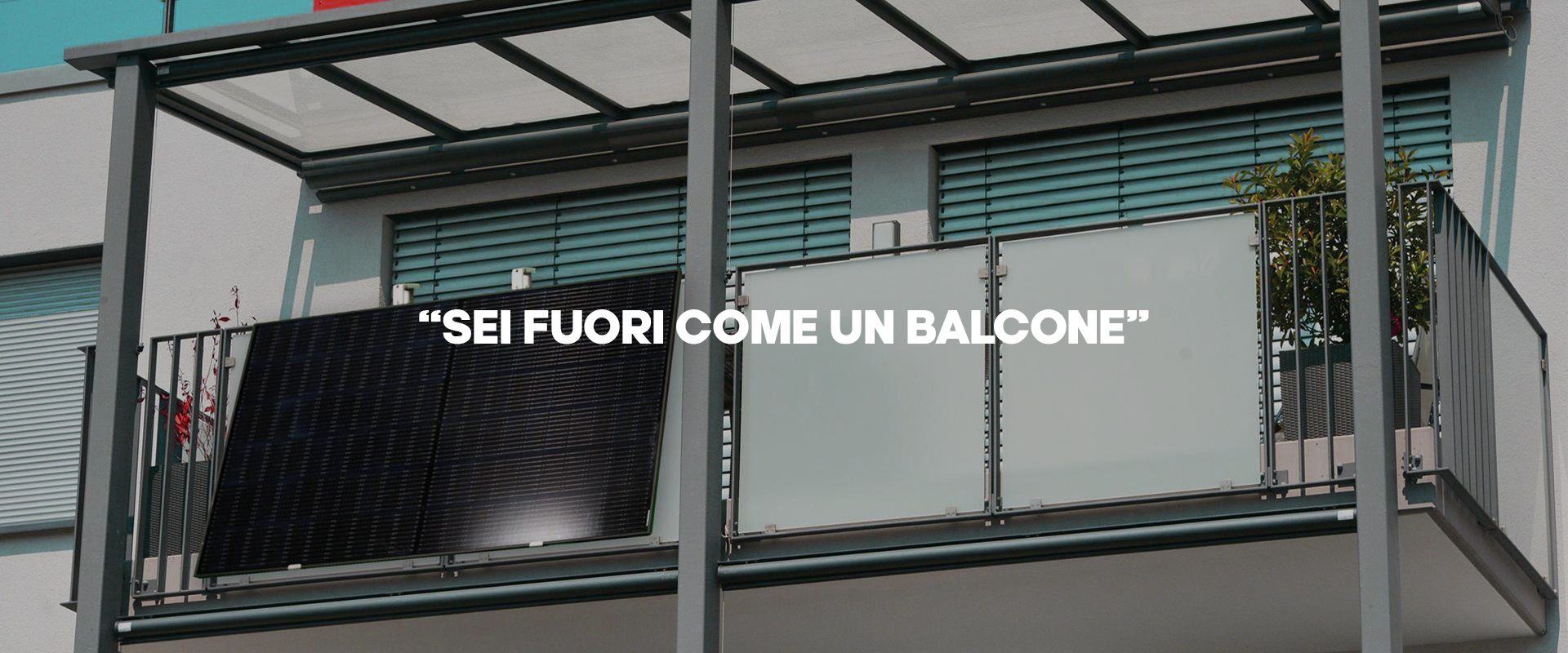
Photovoltaic technologyallowssunlightto be converted directlyinto electricitywithout the need for moving parts. It exploits the so-called photovoltaic effect, which is based on the properties of certain semiconductor materials (i.e., materials that exhibit characteristics of both electrical conductors and electrical insulators, such as silicon) that are capable of generating electricity when struck by solar radiation. Today, it is possible to sell the energy produced by a photovoltaic system. Simply install photovoltaic modules and an inverterfor grid connectionon your roof,and all the energy produced will be paid for by an authorized entity.
In addition to being paid for all the energy produced, you can use it to power your own home and achieve further financial savings.

The sun is afree, ever-present, and inexhaustiblesource of energy. Protection against future increases inenergy and raw materialcosts.

The photovoltaic systemproduces no waste during operation, and the modules can be recycled at the end of their useful life. It can be used in place of roofing, roofs, glass panels, and various barriers. Environmental protection: for every kWh produced, approximately 250 grams of fuel oil are saved, and the emission of 0.75 kg of carbon dioxide into the atmosphere is avoided. It has a long service life (30–40 years).

What Are theBenefits?

BIOMASS

Biomass that can be used for energy purposes consists of all organic materials that can be used directly as fuels or converted into solid, liquid, or gaseous fuels. In addition to species cultivated specifically for energy purposes, biomass includes all products ofagricultural cultivationandforestry, includingresidues from agricultural and forestryprocessing, waste from agri-food products intended for human consumption or animal feed, chemically untreated residues from the wood and paper processing industries, and all organic products resulting from the biological activity of animals and humans, such as those contained in municipal waste (the “organic fraction” of waste). In the broadest sense, biomass can therefore be considered to include all material of organic origin, whether plant or animal.

Energy from biomass is primarily derived fromproduction waste.

It therefore offers an additional economic and social benefit, as the sector reuses and disposes of waste in an environmentally friendly manner.

We build biomass plants with a capacity of up to 1 MW using food waste, livestock waste, and dedicated crops.

What arethe benefits?

MINI WIND TURBINE

The term "mini wind turbine " refers to a small-scale wind power system (which harnesses wind energy to generate electricity) that can be installed in compact spaces. Mini wind turbines refer to wind generators with a power output between 20 and 60 kW, which can be installed in a garden, on a roof, or even on a balcony; this term describes systems capable of producing up to 200 kW of energy. Thanks to tax deductions and incentives, they can be very cost-effective, but it is essential to carefully assess wind conditions at the installation site. Micro-wind turbinesrefer to wind generators with a capacity of up to 5 kW, whilemedium-wind turbines have a capacity ranging from 60 to 200 kW. We design and build systems with mini-wind turbines ranging from 10 to 200 kW.

Wind is aclean energy source. Over the course of a year, a 30-kilowatt turbine generates the same amount of energy as 130 barrels of oil, with the added benefit of producing no harmful emissions.

Unlike fossil fuels, wind turbines of all sizes installed around the world prevent over 40 million tons of CO2 from being released into the atmosphere each year. The costs of wind power are only slightly higher than those of a state-of-the-art coal-fired power plant, and comparable to the costs of a new natural gas power plant. But with the advantage of producing no carbon dioxide emissions.

What Are theBenefits?

SHARE OUR SERVICES

Facebook
Twitter
LinkedIn

REQUEST INFORMATION